
CheckPet · multi-cat feeding
Best automatic cat feeders for two cats
Choose by the problem between the cats, not by hopper size. Two cats that peacefully eat the same dry food may share a divided feeder. Cats on different foods, or a fast cat that steals, need access control—usually one RFID feeder per cat.
On this page
First decide whether the cats can share access
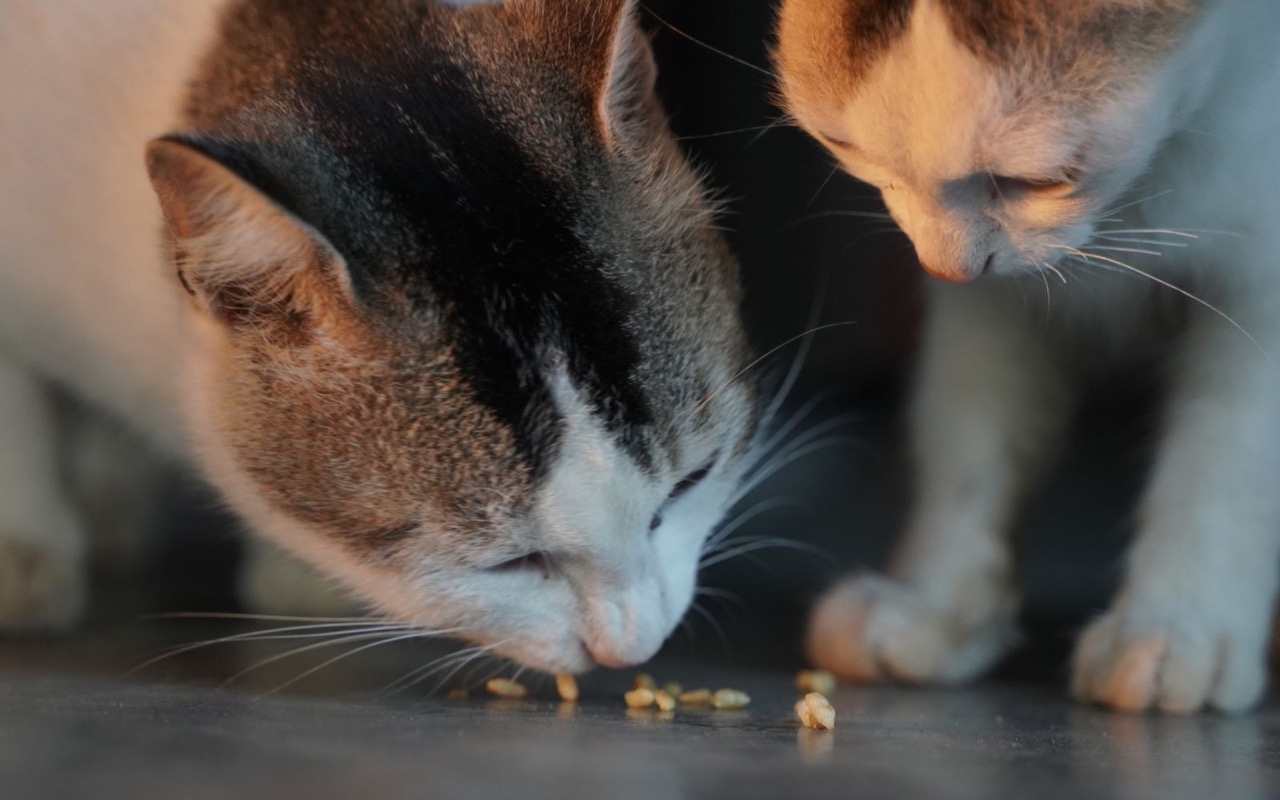
Watch an ordinary meal before shopping. A peaceful shared setup means both cats approach without blocking, finish their own portions, and walk away without checking the other bowl. Bowl symmetry does not prove equal intake: a confident cat can eat from both sides after the other leaves.
- Both cats eat the same dry food
- Their daily calorie targets are close
- Neither guards the feeder or rushes the other
- You can weigh leftovers from each bowl
- One cat eats prescription or life-stage food
- One cat steals, grazes, or eats much faster
- Weight loss or gain requires individual records
- Medication is mixed into only one meal
A dual hopper solves a different problem. It can keep two dry foods separate before dispensing, but if both foods land in open bowls, either cat can still eat either meal. Likewise, a camera may show who visited without physically stopping the wrong cat. Separate the questions: what is dispensed, where it lands, and who can reach it.
Measure before you buy: run a two-night cardboard test
Place the cats’ current bowls where the new feeder would sit. Match the proposed bowl spacing—Oneisall states about 11 inches between its two bowls—and add a cardboard box behind them to represent the feeder body. Observe two evening meals and one early-morning meal.
- Mark each bowl with the cat’s name and weigh the served food.
- Record which cat arrives first, whether either cat blocks the approach, and whether they swap sides.
- Weigh leftovers separately after 20–30 minutes.
- Move the bowls farther apart for the next meal. If tension falls, one compact feeder is the wrong geometry.
- If one cat still crosses over, choose separate protected stations rather than a wider splitter.
Three systems for three different households
Exact Amazon.com listing identities below were checked on November 26, 2026. The browser displayed delivery to Singapore, so CheckPet does not claim current US inventory or price. Confirm the selected size, seller, return terms and delivery address before ordering.
| System | Verified listing | Best when | Skip when | Amazon |
|---|---|---|---|---|
| Oneisall 5L dual-bowl timed feeder | ASIN B0C5X2G933; 20 cups/5L; divided outlet; timed dry-food dispenser | Two compatible cats eat the same kibble and need the same schedule | One cat steals, portions differ sharply, or either diet must be protected | View on Amazon |
| Oneisall 5G Wi-Fi two-cat feeder | ASIN B0C5X4N132; 20 cups/5L; app schedules, feed-now and logs | Shared access is safe and remote schedule changes matter | You do not want app dependence or need proof of each cat’s intake | View on Amazon |
| Petlibro RFID automatic feeder | ASIN B0FP2LV1KJ; collar-tag access, diet tracking and anti-theft lid | One cat must be kept out of the other’s food; plan one controlled station per cat | The cat will not tolerate a collar tag, or you expect one unit to serve two protected diets | View on Amazon |
Audit the real portion—not the app’s portion number
“One portion” is a motor step, not a universal gram measurement. Put an empty bowl on a kitchen scale, tare it, dispense ten portions, and divide the total grams by ten. Repeat three times with the kibble actually used. Large, oily, irregular or mixed pieces can dispense differently and can bridge inside a chute.
Use that measured average with the feeding guidance for the exact food and your veterinarian’s calorie target. Recheck after changing kibble. During the first week, weigh each cat weekly under similar conditions and watch body condition, appetite, vomiting and stool—not just whether the hopper level falls.
For wet food, a large dry hopper is the wrong category. Use a sealed rotating wet-food feeder with the cooling method and safe holding time specified by its maker. If two cats require separate wet diets, use separate access-controlled locations and remove leftovers on schedule.
Plan for power, jams, cleaning and privacy
- Power: install fresh backup batteries if supported, then test one scheduled meal with wall power disconnected.
- Jams: stay home for the first several cycles; do not rely on a new machine during immediate travel.
- Cleaning: inspect the rotor, chute split and bowl seams. Oils and crumbs collect where a quick bowl rinse cannot reach.
- Placement: leave two approach routes. A feeder trapped in a corner lets one cat guard the only exit.
- Connectivity: verify whether schedules remain stored during Wi-Fi loss. App logs report machine events, not necessarily food swallowed.
- Privacy: camera models add microphones, cloud storage and account sharing. Review recording controls and whether optional cloud features cost extra.
Keep a manual meal plan on the refrigerator with gram amounts, food name and emergency contact. A neighbor should be able to feed both cats without the app. Automatic feeding reduces timing work; it does not replace daily observation, water checks or litter-box monitoring.
Best when / Skip if
- The chosen system matches shared or protected access
- Real dispensed grams have been weighed with the actual kibble
- Both cats can approach and leave without blocking
- A human checks both cats and the machine every day
- The model cannot physically protect a required diet
- One cat guards the only approach or exit
- The kibble size falls outside the maker’s stated range
- You need wet-food cooling that a dry hopper cannot provide
Common failures
- Assuming two equal bowls create two equal meals when one cat can cross over.
- Using the app’s “portion” count without weighing the actual output.
- Buying a dual hopper to solve food theft even though both bowls remain open.
- Leaving a new feeder unattended before testing jams, backup power and stored schedules.
- Placing the station in a corner where one cat can guard the only route.
Questions before checkout
Can two cats use one automatic feeder?
Yes, when they safely share the same food and schedule and neither steals. A two-bowl splitter does not control which cat eats which portion.
Will an RFID feeder recognize a microchip?
Only if the exact model says it reads implanted microchips. The linked Petlibro listing uses a collar sensor; do not assume “RFID” means implanted-microchip compatibility.
How do I stop one cat eating the other’s food?
Use access control, separate stations and enough distance that one cat cannot wait beside the other. For prescription food or medication, supervise the transition and verify intake individually.
Do I need two feeders?
Usually yes when diets or calorie targets differ, one cat steals, or you need individual intake records. One shared machine is mainly a scheduling device for compatible cats.
Editorial standards · Affiliate disclosure · Not veterinary advice.