
CheckPet · cat food
Best kitten food
Kittens need more protein and frequent meals than adult cats — adult maintenance kibble does not cover growth. Check age, weight, and AAFCO kitten statement before you buy on Amazon.
On this page
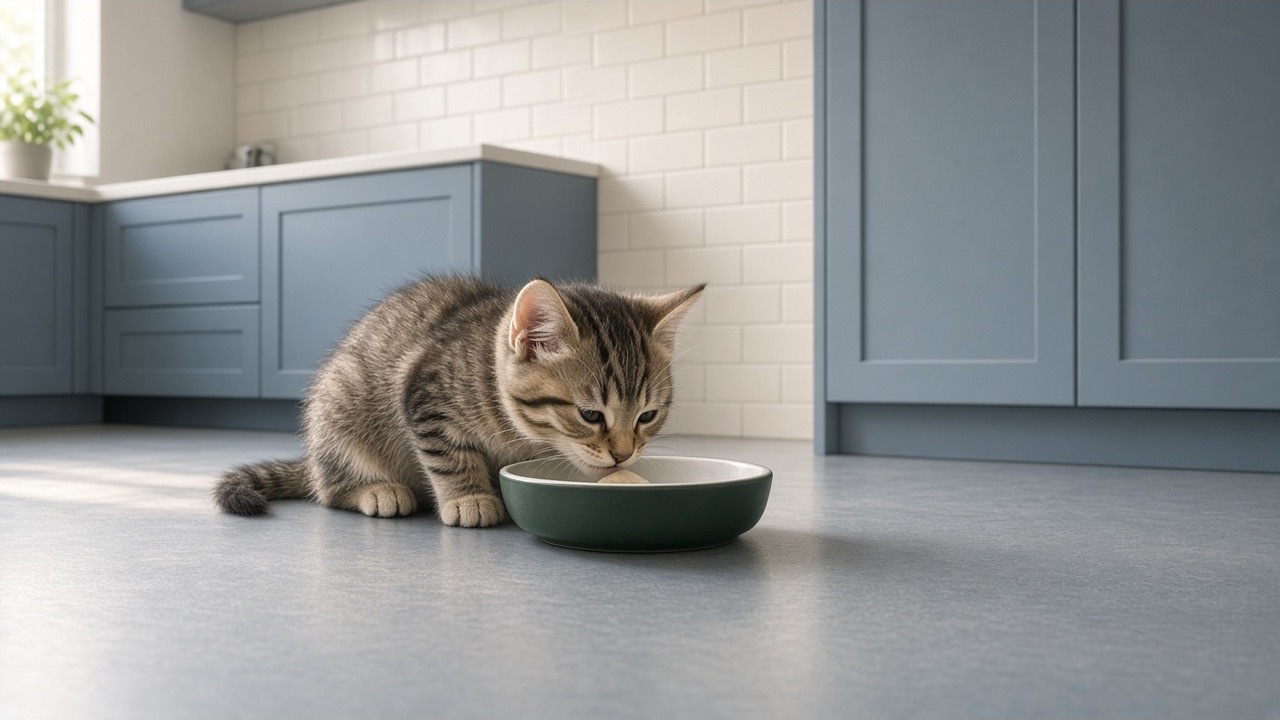
Measure before you buy
| Age | Weaning (~4–6 weeks) through 12 months for many cats — adjust with vet. |
|---|---|
| Weight | Weigh weekly; use bag chart for current weight band. |
| AAFCO | Must include kitten or all life stages — not adult maintenance only. |
| Meals per day | Young kittens often need 3–4 small meals; older kittens taper to 2–3. |
| Listing fit (verify) | Purina Pro Plan Complete Essentials Kitten Chicken & Rice 3.5 lb — confirm on Amazon. |
Weaning week: solid food vs milk replacer
Most kittens begin weaning between about 4 and 6 weeks, but the useful shopping question is whether the kitten is still on milk replacer or already lapping gruel. A growth-labeled dry or wet food belongs in the cart only after your veterinarian confirms the kitten can swallow and digest solids. Under about 8 weeks, many kittens still need replacer or a vet-supervised weaning plan—not adult maintenance kibble and not a puppy formula from a different species guide.
Record age in weeks at purchase time. If the kitten arrived from a shelter or breeder on a specific brand, finish the transition on that diet before swapping flavors. Changing protein sources during the first week home is a common cause of loose stool; that is a transition problem, not proof that “kitten food failed.”
Dry, wet, or mixed: pick the cart before the ASIN
Kitten food shopping fails when you optimize price on a 7 lb dry bag while the kitten will only eat paté, or when you stock wet cases without a calorie plan for mixed feeding. Use this split before opening Amazon tabs:
- Dry-first — weaned kitten, stable stool, you can weigh weekly and refresh kibble often enough that it stays palatable.
- Wet-first or rotation — picky intake, recent weaning from gruel, or your vet wants higher moisture; compare calories per can, not case count alone.
- Mixed — only after you will subtract partial cups and partial cans from the same daily calorie target; never full dry chart plus full wet chart.
Expected adult size is less critical for cats than for puppy size-class lanes; the decisive fields here are weaning status, format, and label life stage.
What the AAFCO line on the bag actually means
Look for kitten, growth, or all life stages in the nutritional adequacy statement—not marketing words on the front panel. AAFCO publishes nutrient profiles and feeding-test protocols; it does not “approve” individual brands. A formulation statement means the recipe meets published kitten nutrient levels; a feeding-test statement means the product completed AAFCO-style growth testing. Either can be valid; your job is to confirm the statement matches a weaned kitten’s life stage, then use the feeding chart for the kitten’s current weight.
Quick comparison
Compare feeding format and bag or case size after confirming the product is labeled for kittens or growth.
| Pick | Best fit | Check before buying | Amazon |
|---|---|---|---|
| Purina Pro Plan Complete Essentials Kitten Chicken & Rice | Dry-food routine with a smaller starter bag | 3.5 lb bag, growth statement, and feeding chart | View on Amazon |
| Purina ONE High Protein Natural Kitten Dry Food | Owners comparing a different dry formula and larger bag | 7 lb size, current ingredients, and cups per day | View on Amazon |
| Purina Pro Plan Development Kitten Wet Food Variety Pack | Wet-food rotation or mixed feeding | Case count, flavors, texture, and calories per can | View on Amazon |
Calculate wet, dry, or mixed feeding before choosing a bag
A low bag price can mislead when the kitten also needs wet meals or when the bag is too large to stay fresh before you finish it. Start with the feeding chart row that matches today’s weight, convert daily cups into days per bag, and compare that with the wet case count. Re-run the math after each weekly weigh-in when the number on the scale changes—not from age alone.
For mixed feeding, do not serve the full dry allowance plus a full wet allowance. Compare calories per cup and per can on the current label, then reduce both portions to fit the veterinarian-guided daily target. Useful listing fields are package weight, calories, growth statement, texture, and case count—not “premium” adjectives in the title.
When the kitten approaches adulthood, plan the switch using body condition and your vet’s timing—not an arbitrary birthday. Our senior cat food guide covers the opposite life-stage label read for cats over about seven years; kittens graduating to adult food need an adult or all-life-stages statement instead.
Weekly weight log (shopping reminder, not a feeding prescription)
Bag feeding charts are organized by weight bands on the label—not by kitten age on your calendar. Keep a simple log: date, age in weeks, weight, and which chart row you used for portion math. When the scale reading moves into another band on the same bag, open the label again and use that row before reordering a jumbo bag sized for the old weight.
This is a record-keeping step for Amazon checkout and bag-size math, not a rule for how much to feed. Portion changes belong to your veterinarian or the product’s current feeding chart for body condition. Appetite alone is not a reliable buy signal—stress, incomplete weaning, and illness can look like “always hungry.”
Best when / skip if
- Kitten is weaned and eating solid food
- You can schedule multiple meals daily
- Chosen format (dry, wet, or mixed) matches how the kitten actually eats
- Adult cat — switch to adult formula at vet-guided timing
- Urinary or renal prescription required
- Kitten under vet-directed bottle feeding only
Weaning steps after solids are cleared
- Weigh kitten; record age in weeks on the same day each week.
- Soften dry kibble with water if the kitten is moving from wet or gruel.
- After each weekly weigh-in, note the chart row that matches the scale reading before changing bag size or cups.
- Keep water available—dry-heavy routines increase thirst; wet-heavy routines still need a clean bowl.
Common failures
- Adult cat food for a 3-month kitten — slower growth and nutrient gaps.
- One large bowl left out — stale kibble and poor portion control.
- No weigh-ins — overweight kittens become obese adults.
FAQ
When do kittens switch to adult cat food?
Often around 12 months, but breed and spay/neuter status matter — confirm with your vet and body condition.
Can I feed full dry and full wet portions together?
No— that double-counts calories. Use the label’s calories per cup and per can, set one daily target with your vet if needed, then split portions across formats.
Editorial standards · Affiliate disclosure · Not veterinary advice.