On this page
- Most Cheap Speakers Sound Like Music Trapped in a Tin Can. These Don’t.
- Quick Verdict: The 6 Best Bluetooth Speakers Under $100 at a Glance
- Individual Reviews: The Real Deal on Each Speaker
- JBL Flip 7 (~$99) — The Crowd Favorite for a Reason
- Sony SRS-XB100 (~$49) — The “Wait, This Is Only $49?” Pick
- Ultimate Ears Wonderboom 3 (~$79) — Built Like a Tank, Floats Like a Duck
- Anker Soundcore Motion 300 (~$79) — The Sleeper Hit
- Tribit StormBox Flow (~$69) — The Marathon Runner
- Bose SoundLink Flex 2 (~$99) — The Clarity King
- The Bass Myth: Why Louder Isn’t Better
- IP Ratings Decoded: What “Waterproof” Actually Means
- Which Speaker Should You Actually Buy? Recommendations by Scenario
- Frequently Asked Questions
- Final Thoughts: Summer 2026 Is Going to Sound Great
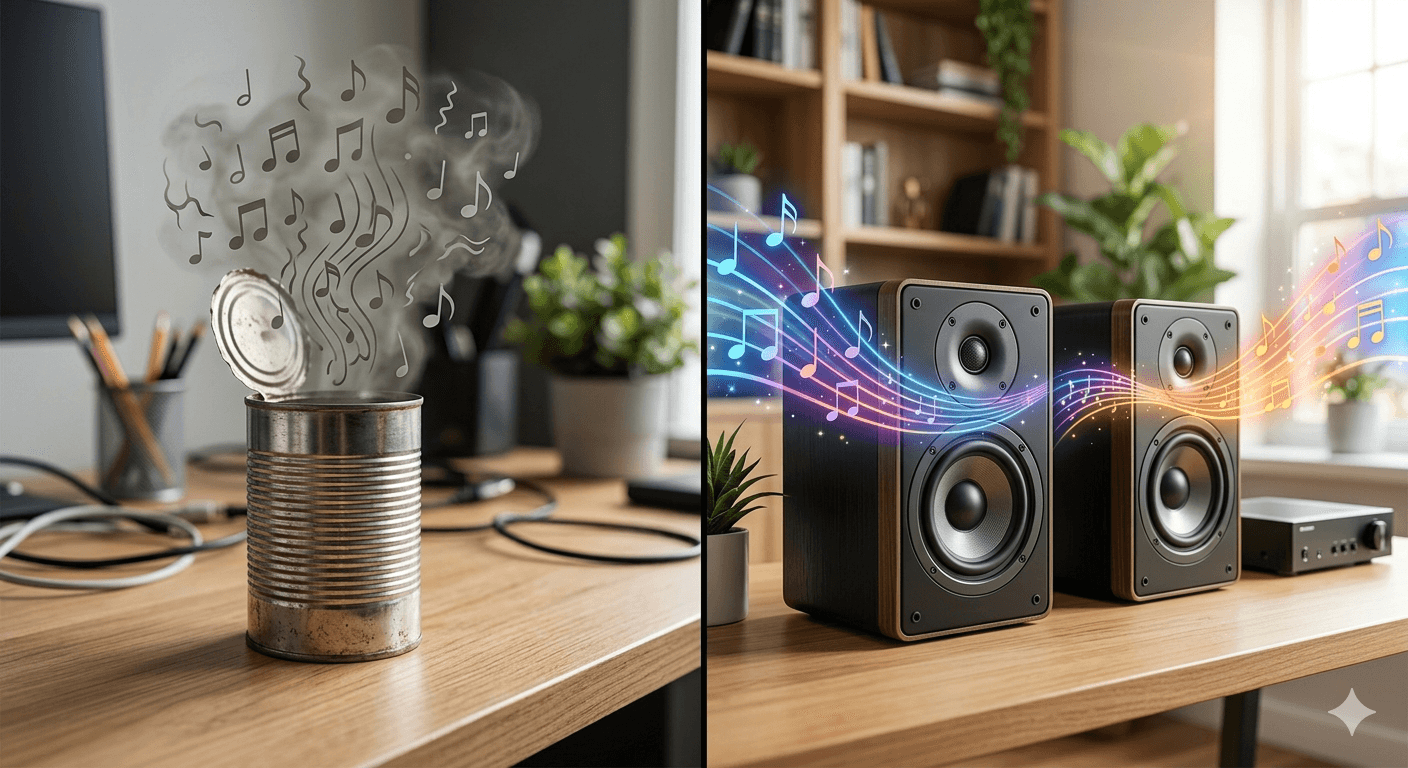
Most Cheap Speakers Sound Like Music Trapped in a Tin Can. These Don’t.
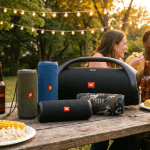
Let me paint you a picture. It’s a Saturday afternoon, you’ve got burgers on the grill, a cooler full of cold ones, and your buddy pulls out a Bluetooth speaker he grabbed off Amazon for twenty bucks. He hits play. And what comes out sounds like someone stuffed a live band inside a soup can and threw it down a stairwell.
We’ve all been there. I’ve been there more times than I care to admit.
Here’s the thing: you don’t need to spend $300 on a premium speaker to get genuinely good sound outdoors. The sub-$100 Bluetooth speaker market in 2026 is stacked. Competition between JBL, Sony, UE, Bose, and a handful of scrappy underdogs like Tribit and Anker has pushed quality way up and prices way down. I’ve spent the last few weeks testing six of the most popular options, cross-referencing my impressions with hundreds of real-world takes from Reddit communities like r/Bluetooth_Speakers, r/BudgetAudiophile, and r/CampingGear.
No sponsored nonsense. No “every speaker is amazing!” filler. Just straight talk about what sounds good, what survives a pool party, and what’s actually worth your money this summer. If you’ve also been looking at upgrading your personal audio setup, check out our workout earbuds roundup for gym-friendly picks.
Quick Verdict: The 6 Best Bluetooth Speakers Under $100 at a Glance
Before we get into the weeds, here’s the cheat sheet. Bookmark this table, screenshot it, send it to your group chat — whatever you need to do.
| Speaker | Price | Battery Life | IP Rating | Weight | Best For |
|---|---|---|---|---|---|
| JBL Flip 7 | ~$99 | 12 hrs | IP67 | 550 g | Best overall / all-rounder |
| Sony SRS-XB100 | ~$49 | 16 hrs | IP67 | 274 g | Best budget / ultra-portable |
| UE Wonderboom 3 | ~$79 | 14 hrs | IP67 | 420 g | Best for pool / beach |
| Anker Soundcore Motion 300 | ~$79 | 13 hrs | IPX7 | 460 g | Best sound per dollar |
| Tribit StormBox Flow | ~$69 | 30 hrs | IP67 | 570 g | Best battery life |
| Bose SoundLink Flex 2 | ~$99 | 12 hrs | IP67 | 590 g | Best clarity / vocals |
Individual Reviews: The Real Deal on Each Speaker
JBL Flip 7 (~$99) — The Crowd Favorite for a Reason
The JBL Flip series has been the default recommendation in budget Bluetooth speakers for years, and the Flip 7 doesn’t mess with that formula. It just… refines it. The sound is full and balanced with surprisingly punchy bass for a cylinder this size. Mids are clear, highs don’t get shrill at high volume, and the 360-degree sound design means placement is forgiving — toss it on a picnic table and everyone in the circle gets a good listen.
Battery life sits at a solid 12 hours, which realistically means a full day of intermittent use. IP67 means it handles dunks, splashes, dust, and sand without flinching. The USB-C charging is fast, and JBL’s PartyBoost lets you pair two together for stereo — which, if you can swing two at $99 each, is genuinely impressive. (Speaking of USB-C, our USB-C explained guide breaks down what all those confusing port specs actually mean.)
What Reddit says:
“Got the Flip 7 for a beach trip last month. Honestly punches way above its weight. My friend has a Charge 5 and the difference isn’t as big as you’d think.” — u/coastal_basshead, r/Bluetooth_Speakers
Bottom line: If you want one speaker that does everything well and nothing poorly, this is the one. It’s the Honda Civic of Bluetooth speakers — not flashy, just reliably great.
Sony SRS-XB100 (~$49) — The “Wait, This Is Only $49?” Pick
This little puck-shaped speaker has no business sounding as good as it does for the price. Sony squeezed a surprisingly wide soundstage into a package smaller than a baseball. The bass isn’t going to rattle windows, but it’s present — which is more than I can say for most speakers at this price. Vocals and acoustic tracks sound particularly good here.
At 274 grams, you can literally clip it to a backpack strap and forget it’s there. The 16-hour battery is fantastic and the IP67 rating means shower use is completely on the table. The built-in mic handles calls decently too, if you’re into that.
What Reddit says:
“Bought the XB100 as a ‘temporary’ speaker while saving for something better. That was 8 months ago. I stopped saving.” — u/frugal_fi_guy, r/BudgetAudiophile
Bottom line: The best value on this list, full stop. If you’re gifting a speaker or need something tiny for travel, this is the move.
Ultimate Ears Wonderboom 3 (~$79) — Built Like a Tank, Floats Like a Duck
UE designed this thing specifically for people who are rough on gear. It floats in water. It’s been drop-tested to survive falls from five feet. The rubbery exterior feels like it could survive being run over by a golf cart (I did not test this, but I believe it). The 360-degree sound is genuinely even — no “sweet spot” to worry about.
Sound-wise, it leans warm with emphasized bass. It won’t win any audiophile contests, but for poolside pop music and backyard hip-hop, the vibe is right. Battery life hits 14 hours, and the Outdoor Boost mode pushes volume and clarity for open-air listening. My one gripe: no aux input and no USB-C audio. But for wireless-only use, it’s a non-issue.
What Reddit says:
“Took my Wonderboom 3 on a river float trip. It fell in the water twice, floated both times, kept playing. Absolute unit.” — u/paddle_or_die, r/CampingGear
Bottom line: The best pick if your speaker’s life expectancy involves water, dirt, drops, and general chaos.
Anker Soundcore Motion 300 (~$79) — The Sleeper Hit
Anker doesn’t get the brand love that JBL or Bose gets, but the Soundcore Motion 300 is quietly one of the best-sounding speakers in this entire price range. It supports LDAC codec, which means if you have a compatible Android phone, you’re getting near-lossless audio streaming. That’s a feature you typically don’t see below $150.
The sound profile is balanced with a slight mid-forward lean that makes vocals pop. The app-based EQ customization is surprisingly deep — you can tune this thing to your exact preferences. Bass response is tight and controlled rather than boomy. Build quality is solid, IPX7 waterproofing handles rain and splashes, and the 13-hour battery is respectable.
What Reddit says:
“The Motion 300 with LDAC on is a different animal. I A/B’d it against my roommate’s JBL Flip and the detail was noticeably better on the Anker. Wild for $79.” — u/codec_nerd_42, r/BudgetAudiophile
Bottom line: If sound quality is your top priority and you’re on Android, this is the best $79 you’ll spend on audio this year.
Tribit StormBox Flow (~$69) — The Marathon Runner
Thirty hours. Thirty hours of battery life. Let that sink in. You can leave for a three-day camping weekend, play music for hours each day, and come home with battery to spare. That alone puts the StormBox Flow in a category of its own.
But it’s not just a one-trick pony. The sound is genuinely good — warm, with a bass boost mode (XBass) that adds thump without turning everything into mud. It handles rock, electronic, and hip-hop well. The build is solid with IP67 protection, and at $69, the value proposition is hard to argue with. The only knock is that the highs can get slightly harsh at max volume, but at reasonable listening levels, it’s a non-issue.
What Reddit says:
“Brought the StormBox Flow on a 5-day camping trip. Played it every evening. Came home with 40% battery. I don’t understand the physics but I’m not complaining.” — u/backcountry_beats, r/CampingGear
Bottom line: If you hate charging things (same) or spend a lot of time off-grid, this is your speaker.
Bose SoundLink Flex 2 (~$99) — The Clarity King
Leave it to Bose to make a speaker that costs the same as its competitors but somehow sounds more refined. The SoundLink Flex 2 doesn’t try to be the loudest or bassiest speaker on this list. Instead, it focuses on clarity, separation, and making everything sound clean. Acoustic music, podcasts, jazz, singer-songwriter stuff — this is where the Flex 2 absolutely shines.
The PositionIQ technology automatically adjusts the EQ based on orientation (standing upright vs. hanging vs. laid flat), which sounds gimmicky but actually works. Bass is present and controlled. Build quality feels premium — that rubberized silicone exterior has a satisfying heft to it. IP67 and a carabiner-friendly loop round out the package. If you’re also a Bose headphone fan, our Sony WH-1000XM6 review compares the latest from both camps.
What Reddit says:
“I own the Flex 2 and a JBL Flip 7. The JBL gets louder and has more bass. The Bose just sounds… better? Cleaner? Hard to explain but once you hear it you get it.” — u/quiet_listener_pdx, r/Bluetooth_Speakers
Bottom line: The pick for listeners who value clarity and detail over raw volume. Also, arguably the best-looking speaker on this list.
The Bass Myth: Why Louder Isn’t Better
Let’s talk about the elephant in the room. Every speaker ad wants you to believe that more bass = better sound. And look, I get it — bass is fun. When that kick drum hits in your favorite track, you want to feel it. But here’s what I’ve learned after testing dozens of speakers over the years: uncontrolled bass is the enemy of good sound.
When a small speaker tries to push bass beyond what its driver can physically handle, you get distortion, muddiness, and a loss of detail in the mids and highs. Vocals sound buried. Guitar riffs lose their edge. The “thump” you’re hearing isn’t musical bass — it’s the speaker struggling.
This is why the Anker Motion 300 and Bose Flex 2 often sound better than speakers with technically more bass output. Their bass is controlled and proportional. Meanwhile, some budget speakers crank the low end to mask how thin everything else sounds. It’s the audio equivalent of putting ketchup on a bad steak.
Here’s a practical test: play a song you know well — something with vocals, drums, and guitar. If you can clearly hear all three without any one drowning out the others, the speaker has good tuning. If it sounds like the singer is performing inside a subwoofer, that’s a red flag. Reddit’s r/BudgetAudiophile community hammers this point constantly, and they’re right.
IP Ratings Decoded: What “Waterproof” Actually Means
Every speaker on this list has some form of water resistance, but the marketing around IP ratings is confusing on purpose. Let me break it down simply.
An IP rating has two digits. The first is dust protection (0-6 scale). The second is water protection (0-9 scale). So IP67 means:
- 6 — Completely dust-tight. Nothing gets in.
- 7 — Survives submersion in up to 1 meter of water for 30 minutes.
IPX7 (like the Anker Motion 300) means the speaker wasn’t tested for dust — the “X” is a placeholder, not a zero. It doesn’t mean it has no dust protection; it just means the manufacturer didn’t certify it. For most people, this is a non-issue unless you’re taking it to Burning Man.
What the ratings actually mean in real life:
| Scenario | What You Need | Safe? |
|---|---|---|
| Light rain / splashes | IPX4 or higher | All 6 speakers: Yes |
| Shower use | IPX5 or higher | All 6 speakers: Yes |
| Poolside (occasional splash) | IPX7 or higher | All 6 speakers: Yes |
| Submerged in pool/lake | IP67 / IPX7 | All 6 speakers: Yes (briefly) |
| Saltwater / ocean | IP67 minimum | Technically yes, but rinse immediately after |
| Sandy beach | IP6X (dust rated) | IP67 models: Yes. IPX7: Probably fine, not certified |
Pro tip: Even with IP67, don’t press buttons while the speaker is submerged — water can get forced into the seals. And always make sure the USB-C port cover is sealed before any water exposure. I’ve seen too many “my waterproof speaker died” posts on Reddit that boil down to an open charging port.
Which Speaker Should You Actually Buy? Recommendations by Scenario
Here’s where I stop being diplomatic and just tell you what to get based on how you’ll actually use it.
Pool Party / Beach Days
Pick: UE Wonderboom 3 ($79) — It floats. It’s basically indestructible. The 360-degree sound means everyone around the pool hears it evenly. This is the speaker that doesn’t care about your lifestyle; it’ll survive it.
Runner-up: JBL Flip 7 if you want louder sound and don’t plan on actually submerging it.
Camping / Hiking / Off-Grid
Pick: Tribit StormBox Flow ($69) — Thirty-hour battery. That’s the whole argument. When you’re two days into a backcountry trip with no outlet in sight, you’ll be very glad you picked the speaker that simply refuses to die.
Runner-up: Sony SRS-XB100 if weight is your primary concern (it’s nearly half the weight).
Desk / Indoor / Work From Home
Pick: Bose SoundLink Flex 2 ($99) — In a quiet indoor environment, the Flex 2’s clarity advantage becomes even more obvious. Podcasts, video calls, background music while working — everything sounds crisp and detailed. PositionIQ means you can stand it up on your desk or lay it flat and it adjusts automatically.
Runner-up: Anker Soundcore Motion 300, especially if you want to deep-dive into EQ customization through the app.
Gifting (Birthdays, Graduations, “Just Because”)
Pick: Sony SRS-XB100 ($49) — It’s under fifty bucks, it looks cute in multiple colorways, it sounds way better than anyone expects, and it’s small enough to wrap easily. This is the speaker you buy for someone who didn’t know they needed a Bluetooth speaker. They’ll use it every day.
Absolute Best Sound Under $100
Pick: Anker Soundcore Motion 300 ($79) — With LDAC support and a tunable EQ, this is the audiophile’s budget pick. Pair it with a decent music streaming service at high quality and you’ll hear details in songs you’ve listened to a hundred times. It’s $79 sounding like $150, and I don’t say that lightly.
Frequently Asked Questions
Can I use these speakers in the shower?
Yes, all six speakers on this list are rated IPX7 or IP67, which means they can handle sustained water exposure well beyond what a shower produces. Just make sure the USB-C port is sealed. The Sony SRS-XB100 and UE Wonderboom 3 are particularly popular shower speakers thanks to their compact size.
Do any of these support stereo pairing?
Yes. The JBL Flip 7 (PartyBoost), Anker Soundcore Motion 300, Tribit StormBox Flow, and Sony SRS-XB100 all support pairing two identical units for stereo sound. The UE Wonderboom 3 supports pairing two units for louder mono output, not true stereo. The Bose SoundLink Flex 2 supports stereo pairing through the Bose app.
What about Bluetooth range?
All six speakers use Bluetooth 5.x, which gives a theoretical range of around 30 feet (10 meters) reliably, and sometimes up to 50+ feet in open outdoor settings with no obstructions. Walls, bodies, and other electronics will reduce range. In my backyard testing, all six maintained solid connections at 30-35 feet with no dropouts.
Is the JBL Flip 7 worth the extra money over the Tribit or Anker?
It depends on what you value. The JBL is the best all-rounder with the most brand support and accessories. But the Anker arguably sounds better at $79, and the Tribit lasts nearly three times longer on a charge at $69. The JBL tax is real, but so is the build quality and resale value.
Can these speakers charge my phone?
No. Unlike larger speakers in the JBL Charge series, none of these models double as a power bank. If that’s a must-have, look at the JBL Charge 6, though it’ll cost you north of $150.
What music streaming quality should I use?
For most of these speakers, “High” quality on Spotify or equivalent (256-320 kbps) is the sweet spot. The exception is the Anker Soundcore Motion 300 with LDAC, which can genuinely benefit from lossless or near-lossless streams if your phone supports it. Beyond that, the speaker drivers are the bottleneck, not the stream quality.
Final Thoughts: Summer 2026 Is Going to Sound Great
Here’s what I keep coming back to: every single speaker on this list is genuinely good. A few years ago, getting decent portable sound under $100 meant compromises everywhere — tinny highs, nonexistent bass, batteries that died mid-afternoon, or “waterproof” ratings that were more of a suggestion than a promise. That era is over.
If you forced me to pick one at gunpoint? The JBL Flip 7 for the safest all-around recommendation. The Anker Soundcore Motion 300 if sound quality is king. And the Sony SRS-XB100 if you want the best bang for your buck in the most pocketable package.
Now go fire up the grill, queue up your summer playlist, and enjoy music that doesn’t sound like it’s being played through a tin can. You deserve that.