
CheckPet · dog furniture
Best orthopedic dog beds for senior dogs
Choose the sleeping surface before the brand: measure the dog while fully stretched, subtract any bolsters from the advertised dimensions, and reject a bed whose entry edge or soft foam makes getting up harder.
On this page
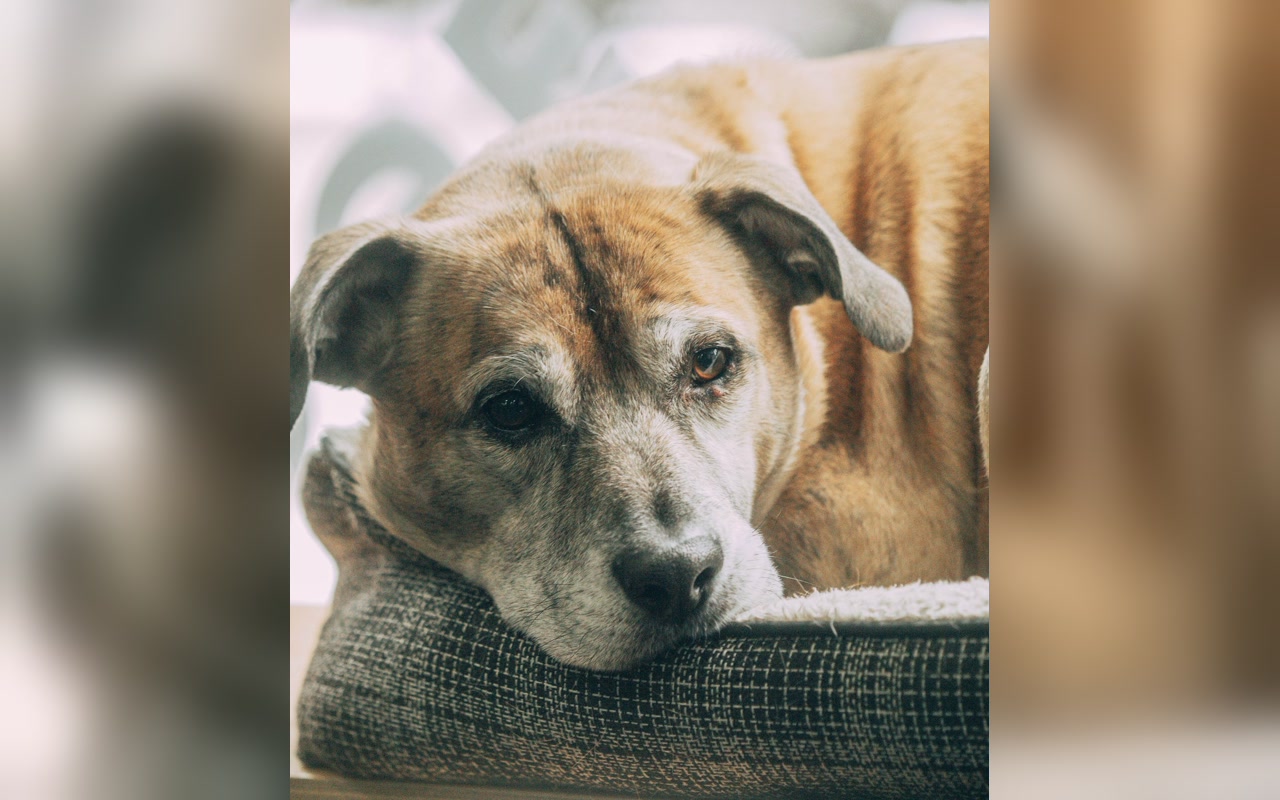
Measure before you buy: use the sleeping surface, not the outside rectangle
Measure the dog from nose to base of tail while stretched out, then add about 6–12 inches for repositioning. For a curl-up sleeper, also measure shoulder-to-rump length and the relaxed curl diameter. Compare those numbers with the flat center cushion, not the product’s widest outside dimensions.
| Dog measurement | Nose to tail base in the longest normal sleeping position. |
|---|---|
| Bed measurement | Flat surface inside bolsters; subtract raised sides from the advertised length and width. |
| Entry edge | Measure floor to the lowest usable edge. A tall front lip can defeat a low bed. |
| Room fit | Tape the full outer footprint on the floor, including the path the dog uses to turn and step in. |
| Cleaning fit | Confirm the cover—not just a small liner—can be removed and fits your washer. |
Match the bed shape to how the dog gets down and stands up
A dog that circles, curls, and leans may use a three-sided bolster. A dog that stretches flat or approaches with stiff rear legs often needs an open side or flat mattress. Watch one ordinary rise from the current bed: if the dog braces against a wall, slips on the cover, or pauses at a raised edge, fix that obstacle before buying thicker foam.
- Low open front: easier approach while retaining a headrest on three sides.
- Flat mattress: no border to clear and the entire rectangle remains usable.
- Four-sided nest: suitable only when the dog comfortably steps over the front and fits inside the inner well.
- Headrest: useful for a dog that chooses elevation; wasted space for a full-body stretcher.
Three verified shapes, not one universal winner
Exact listing identities below were checked on Amazon.com on November 26, 2026. Delivery status shown to our browser was for Singapore, so CheckPet does not claim current U.S. stock. Recheck size, color, seller, dimensions, and delivery before ordering.
| Bed | Verified variant | Best when | Skip when | Amazon |
|---|---|---|---|---|
| Furhaven Plush & Suede Orthopedic Sofa Bed | Medium, Almond; 30 × 20 × 6 in; three bolsters and open front | A medium dog curls or rests its head and clears the entry | The dog needs the full outside rectangle or chews fabric | View on Amazon |
| PetFusion Ultimate Orthopedic Dog Bed | Small; 25 × 20 × about 5–5.5 in; 4-in memory-foam base, bolsters, liner | A small dog uses a bolster and you want a removable cover plus liner | A raised side blocks entry or the inner well is too short | View on Amazon |
| Big Barker Headrest Orthopedic Bed | Large, Khaki; 48 × 30 × 7 in; headrest and removable cover | A 50–70 lb dog stretches out and uses a single headrest | Seven inches is too high to step onto or the 48-in footprint blocks the room | View on Amazon |
Run a bottoming-out check after delivery
Before removing packaging or return labels, press one flat hand where the dog’s hip will rest. Add steady body-weight pressure rather than a quick poke. If you immediately feel the floor or base board, the foam is not supporting that load. Repeat near the center and entry edge; uneven support can make turning or rising less stable.
Foam thickness alone does not reveal firmness, density, or durability. Allow compressed foam the manufacturer’s stated expansion time, keep the packing until the dog has entered and risen comfortably, and follow the seller’s return conditions. This is a fit check, not a treatment claim.
Build the cleanup stack before an accident
- Confirm whether the cover is removable and whether zippers open far enough to remove foam without bending it.
- Distinguish a waterproof liner from a water-resistant cover; those are not the same barrier.
- Check whether replacement covers or liners exist for the exact size.
- Place a washable non-slip layer underneath if the bed moves when the dog stands.
- Follow the care label; foam cores generally should not go into a washing machine.
Best when / skip if
- You measured the dog in its real sleeping position
- The usable center exceeds those measurements
- The entry edge and cover are stable under the dog’s paws
- You can remove and wash the cover before an accident happens
- The dog chews or ingests foam or fabric
- A bolster removes needed sleeping space
- The dog cannot clear the entry without pausing or dragging a paw
- Pain, weakness, or sudden reluctance to rise needs veterinary assessment
Common failures
- Buying from outer dimensions and discovering the dog cannot stretch inside the bolsters.
- Choosing the thickest option even though its entry is harder to climb.
- Assuming “orthopedic” proves foam density or a medical outcome.
- Ignoring the washer opening, zipper path, or replacement-cover cost.
- Placing a slick-bottom bed on hard flooring and making the first step unstable.
Questions before checkout
Does an older dog automatically need an orthopedic bed?
No. Age is a prompt to inspect mobility, sleeping position, pressure points, warmth, and cleanup needs. A well-fitted stable bed matters more than the marketing word.
Are bolsters good for senior dogs?
They can provide a headrest and a boundary for curl-up sleepers, but they reduce usable surface and create an edge to clear. Choose from the dog’s observed sleep and entry pattern.
How large should the bed be?
Measure nose to tail base while the dog is fully stretched, add 6–12 inches, and compare that result with the flat inner surface. If the seller only gives outer dimensions, ask for the center-cushion size or choose a flat mattress.
Editorial standards · Affiliate disclosure · Not veterinary advice.